Fun fact nobody mentions when you buy your first scale figure: it was designed in a country with four seasons. We have two. Tag-init and tag-ulan.
So that figure you waited three months for is now living somewhere with 34°C afternoons in April and humidity that sits around 80% the moment habagat rolls in. And PVC, the plastic most figures are made of, doesn’t love either one.
Sooner or later, every Pinoy collector ends up asking the same things. Why is she leaning? Bakit ang lagkit? Where did these spots on the box come from? Most of it is preventable, and you don’t need a fancy climate-controlled room to do it. You just need to know what the heat and moisture are actually doing, and where the danger spots are in a typical Filipino house.
The short version: Store your figures in a cool, shaded spot (under 30°C if you can), away from windows Put the in a closed container with silica gel. Use LED lights, not sun. Support the people standing on one leg. Store boxes in sealed containers, off the ground. And for heaven’s sake, don’t leave them in a parked car alone.
What Philippine heat and humidity do to your figures
Leaning (the one everyone dreads)
You know that figure balanced on one toe with her long hair flowing behind her? Looks amazing on the shelf. In our climate, it’s also a slow-motion accident. PVC gets softer as it warms up, and months of 32°C afternoons put steady pressure on those tiny contact points. Then one day you walk past your shelf and she’s tilting like she had one too many at the Christmas party. Once a figure starts leaning, it almost never straightens itself out.
Prize figures tend to have it worse. They’re made to hit a lower price, so they often come with fewer support pegs than the pricier scale figures.
That sticky, oily feeling
If your figure feels tacky when you pick it up, you’re not imagining it. PVC has plasticizers mixed in to keep it flexible, and heat pulls them up to the surface. What’s left is a greasy film that grabs every bit of dust in the room. Leave two figures touching in the heat long enough and the paint can even stick or transfer from one to the other.
Yellowing and faded colors
This one’s mostly UV light. White outfits, pale skin, and clear parts go first, and effect parts and Nendoroid stands are notorious for it. The sun also fades paint and bleaches your box art. Heat just makes everything happen faster.
Mold spots and sad, warped boxes
Humidity mostly goes after the stuff around your figure. Cardboard drinks up moisture, so boxes warp, get those little mildew spots, and start smelling like an old bodega. Metal pegs and stand rods can rust too. If you keep your boxes for resale (smart move), a moldy one takes a real bite out of the value. Sayang.
Start with the right spot in your house
Honestly, where you put your shelf matters more than anything you’ll buy for it.
Go for an interior wall, away from windows. If your room faces west, you already know how brutal the 3PM sun gets, so keep your figures out of its path. Living under a GI roof? The top shelf is the hottest spot in the room, since heat collects near the ceiling. The bodega, the attic, and the garage are a hard no. Same with the kitchen (heat, grease, and whatever’s being fried) and anywhere near the CR where steam drifts out.
If you have an aircon room, that’s your best bet. Just don’t put the shelf right where the AC blows. A cold blast all night and then warm air once the AC goes off is a lot of back and forth, and those swings can cause condensation.
One more thing, especially if your area floods during typhoon season: nothing important on the bottom shelf.
Get a closed display case (but don’t trap the humidity in)
A glass or acrylic cabinet is one of the best upgrades you can make. Less dust, fewer temperature swings, and a small space you can actually control.
A lot of collectors stop there, though, and that’s where it goes wrong. Close a case in a humid room and you’ve just sealed that humid air in with your figures. You need something inside to pull the moisture out.
Silica gel canisters are what we’d reach for first. Get the rechargeable kind that changes color when it’s full, then dry it out following the instructions on the pack.
Calcium chloride moisture absorbers, those tubs you see at the supermarket, work too and they’re cheap. The downside is they fill up with salty liquid that’s corrosive. Keep them on the bottom shelf in a tray, replace them before they’re full, and never put one anywhere it could tip over onto a figure.
A digital thermo-hygrometer from Shopee or Lazada costs less than a prize figure, and you’ll finally know what’s going on inside your case. Try to keep humidity under 60%. Somewhere between 40 and 55% is ideal. Above that, mold starts getting comfortable.
Got a big collection? Running a dehumidifier in the room during rainy season is worth every peso.
Keep the sun off them
Close your curtains or blinds during the day, especially if your room gets afternoon sun. If the shelf really has to be near a window, UV-blocking window film is cheap and helps a lot.
For lighting inside the case, use LEDs. They give off very little UV and way less heat than old halogen or incandescent bulbs. Still, don’t let the strips touch your figures, and turn them off when nobody’s around to look. And for your grail (you know the one), an acrylic case with UV protection is worth the splurge.
Support the risky ones before they lean
Use every peg and support part that came in the box, even the ugly clear ones. If a figure has a dramatic pose, long hair, a cape, or a heavy weapon, add a clear acrylic support rod under the weakest point. Nobody’s going to notice it.
Do a quick walk-by check once a month. A lean you catch early is easy to stop with a support. One that’s been going on for a year is a different story.
Some collectors fix mild leans with a hair dryer on low, holding the part in place until it cools. It can work, but it can also ruin paint and seams, so only try it on a figure you’re okay risking.
Storing your boxes and backlog
Keep your boxes. Future you will thank you. Stand them upright in lidded plastic bins, toss in a few silica gel packs, and keep the bins off the floor, since concrete pulls moisture up into cardboard. Not in the bodega, and not under the roof.
If you’ve opened a figure and put it back in its box, don’t wrap painted parts tightly in plastic, and don’t let pieces rest against each other for months. That’s usually how paint ends up sticking. For anything that stays boxed long-term, open it up and check on it once or twice a year.
Please don’t leave figures in the car
I learned this one the hard way. I remember putting some figures on my car dashboard, and they melted. Hahaha. Lesson learned.
So trust me on this one. You just came from a con, your hands are full of loot, and you want to grab merienda first. Bring the bags with you. A car parked under the Philippine sun can go past 60°C inside in less than an hour. That’s hot enough to soften PVC, and a figure can warp in a single afternoon.
When your order arrives
Parcels spend time in delivery trucks and sorting hubs, and those get hot. Open the shipping package soon after it arrives and check that the figure box is in good shape. If the box feels a little damp, let it air-dry somewhere shaded with good airflow. Not in direct sun.
Before you open the figure box itself, though, think about whether you might sell it someday. Opening a figure affects its value, especially if you plan to resell, since sealed figures usually go for more. If you’re not sure how collectors grade this, check out our guide on what MIB, BIB, and MISB mean.
If you’re opening it for display, let the figure sit at room temperature for a while before putting it on the shelf.
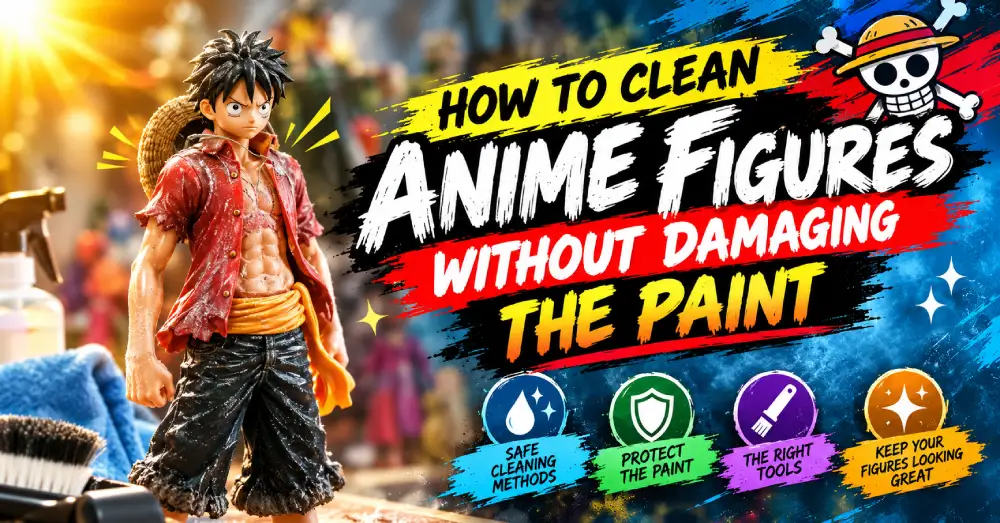
How to clean your figures without ruining the paint
Personally, I use makeup brushes to clean my figures, plus an all-in-one cleaning tool I ordered from Shopee. A soft brush every week or two is all most figures need. A camera air blower works too. Just skip canned air up close, since it can spit out freezing liquid.
Please don’t use alcohol. I remember using alcohol on one of my figures, and the paint got dried out easily. Same goes for acetone and household cleaners. They can damage paint fast.
If a figure has gone sticky, lukewarm water with a drop of mild dish soap and a soft brush usually does the trick. Rinse gently, then let it dry completely in the shade before putting it back. If the paint looks delicate, skip the bath.
Rainy season, brownouts, and the occasional lindol
Collecting here comes with a few extra boss fights. When a typhoon’s on the way, move figures and boxes away from windows, and higher up if your area floods. From June to November, check and recharge your desiccants more often than usual. During summer brownouts, keep the curtains shut so the room doesn’t turn into an oven while the AC is off.
And since earthquakes are part of life here too, put a small dab of museum putty or wax under each base. It keeps your figures from walking off the shelf when things start shaking.
Your quick checklist
- Shelf on an interior wall, away from windows and direct sun
- Room under 30°C, humidity under 60%
- Closed case with silica gel and a hygrometer inside
- LED lights only, curtains closed during the day
- Acrylic supports for tall, one-legged, or top-heavy figures
- Boxes upright in sealed bins, off the floor
- Nothing left in a parked car, ever
- Soft brush for dusting, no alcohol or harsh cleaners
Frequently asked questions
What is the maximum temperature for anime figures?
There isn’t a single magic number, as PVC gradually softens. Consistent temperatures above 30°C increase the chance of warping over time, and a sudden rise (such as in a parked car) can distort a figure in a matter of hours. Maintaining your display area below 30°C is a solid guideline.
Is a room with air conditioning sufficient to safeguard my figures?
It’s the most significant assistance, as it reduces both heat and humidity. Simply avoid exposing your figures to direct sunlight and keep them away from the airflow of the AC.
What makes my anime figure sticky?
Heat draws the plasticizers in PVC to the surface, resulting in a sticky coating. Warm water with some gentle soap typically removes it, and maintaining a cooler temperature helps prevent it from returning.
How do I stop my figures from yellowing?
Keep UV light away from them. That means no direct sun, curtains closed during the day, and LED lighting in your case. White and clear parts yellow first, so give those figures the safest spot.
Can humidity affect the figure itself, or only the box?
Boxes endure the majority of the damage from mold, distortion, and blemishes. However, humidity may also corrode metal pegs and encourage dirt accumulation on dusty figures, thus reducing moisture safeguards both.
Do Nendoroids and prize figures require the same level of attention?
Yup. Nendoroid transparent bases are recognized for becoming yellow, while prize figures tend to lean more easily. All PVC figures require the same fundamental maintenance.
Looking for your next figure?
Once your shelf is sorted, you’ll probably want to fill it. We won’t judge. Everything at Shonen Den is authentic, straight from makers like Banpresto, Bandai, and Good Smile Company, and we ship nationwide through J&T Express.